
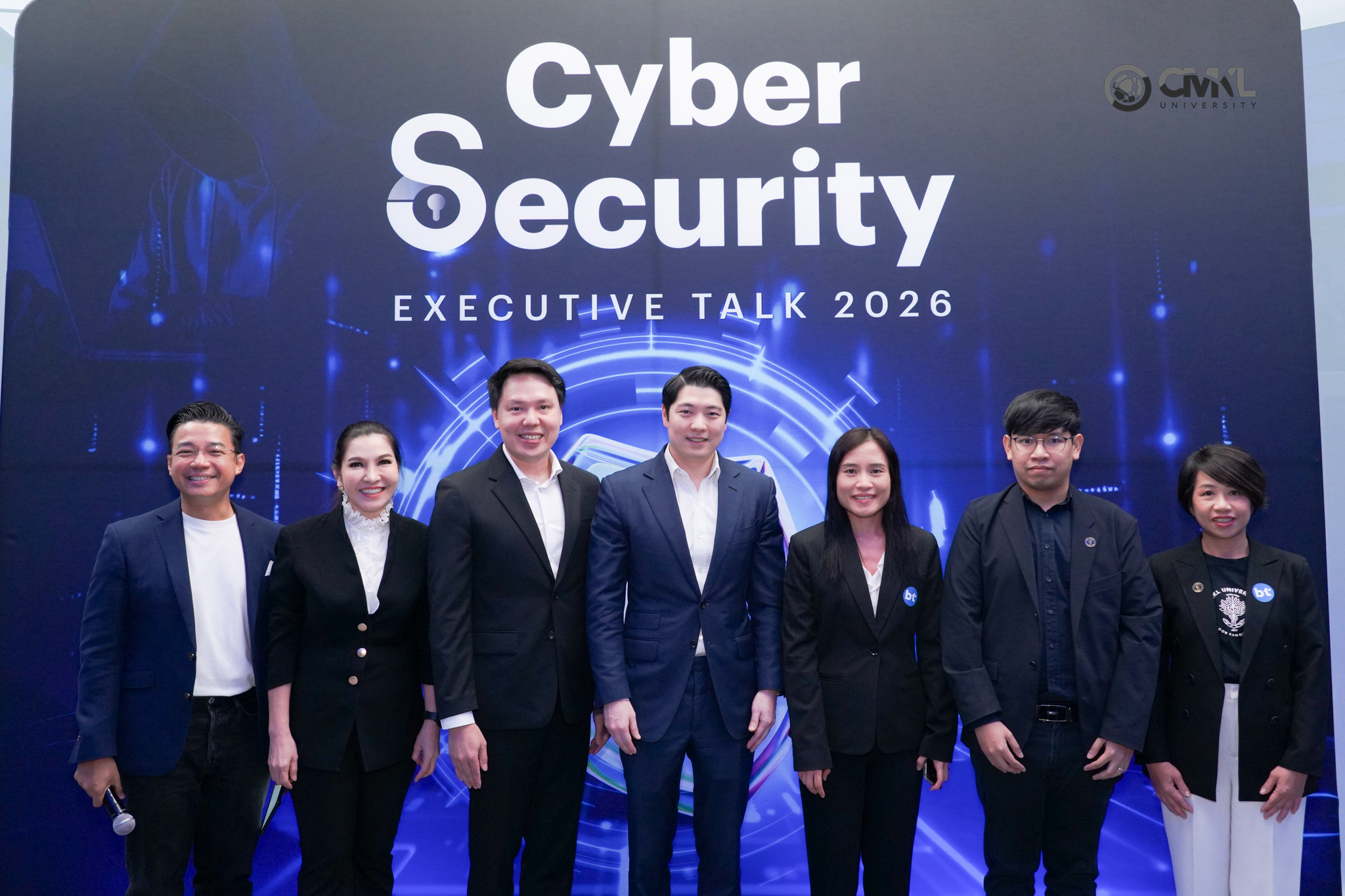
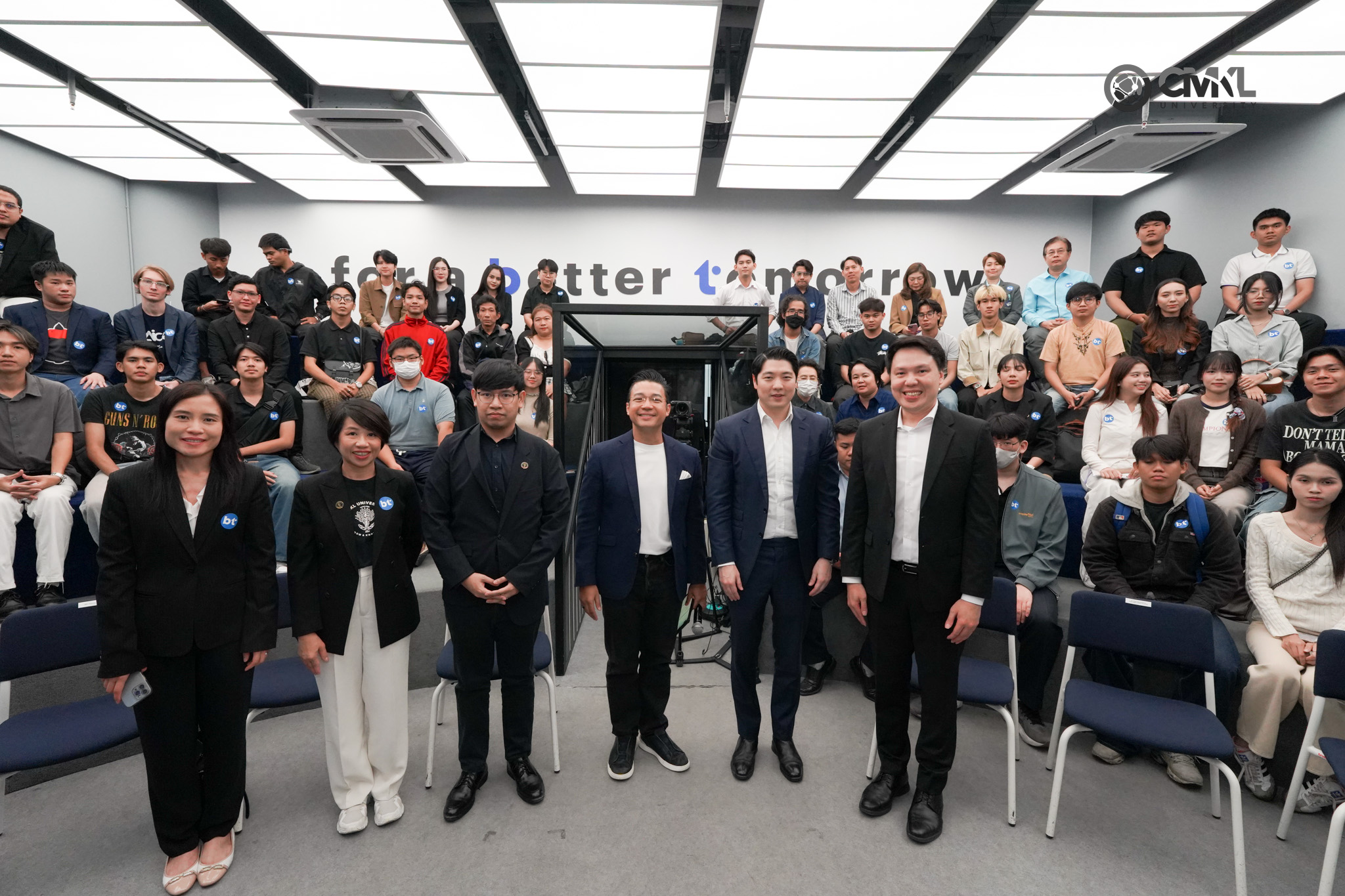
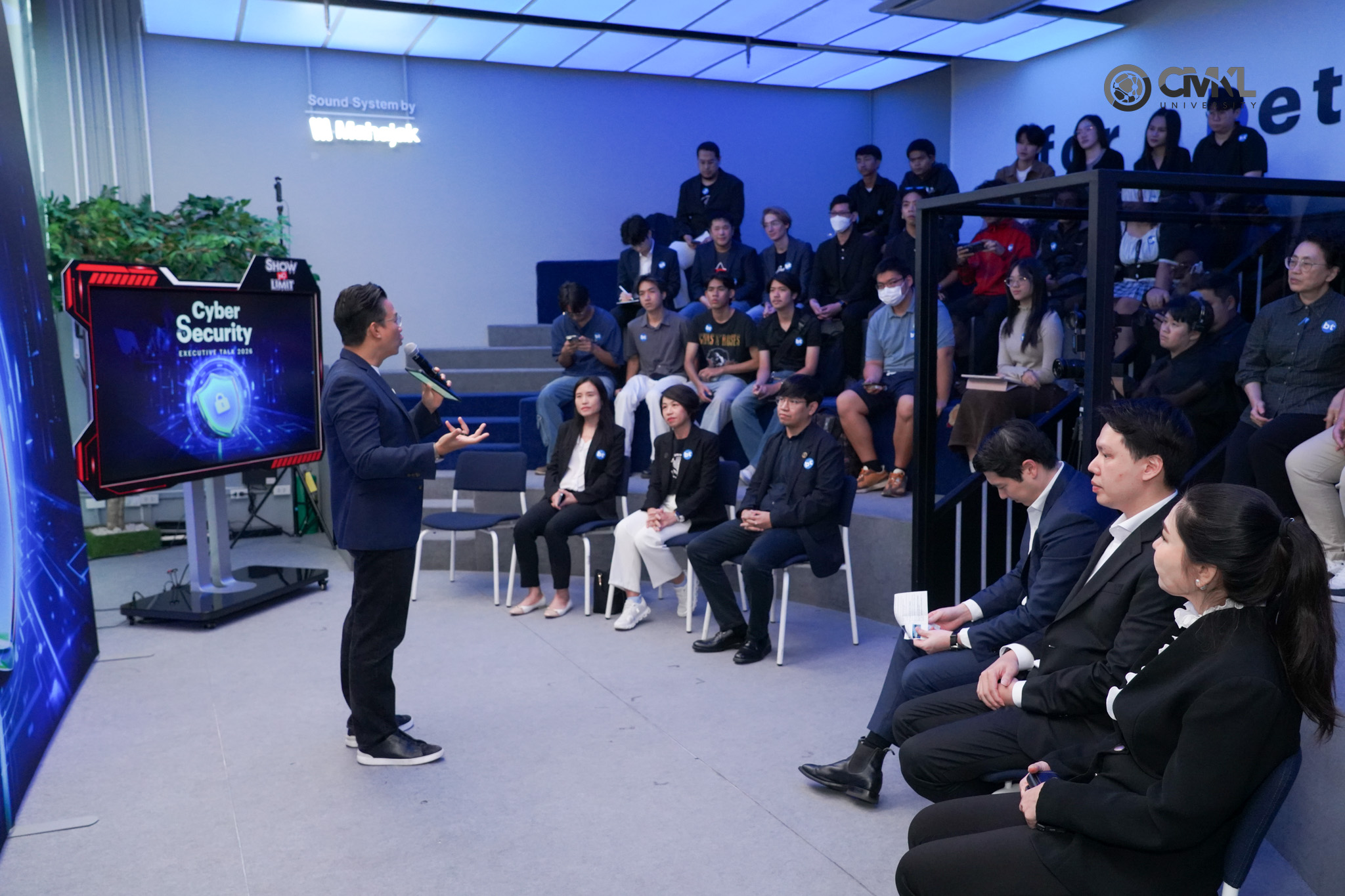
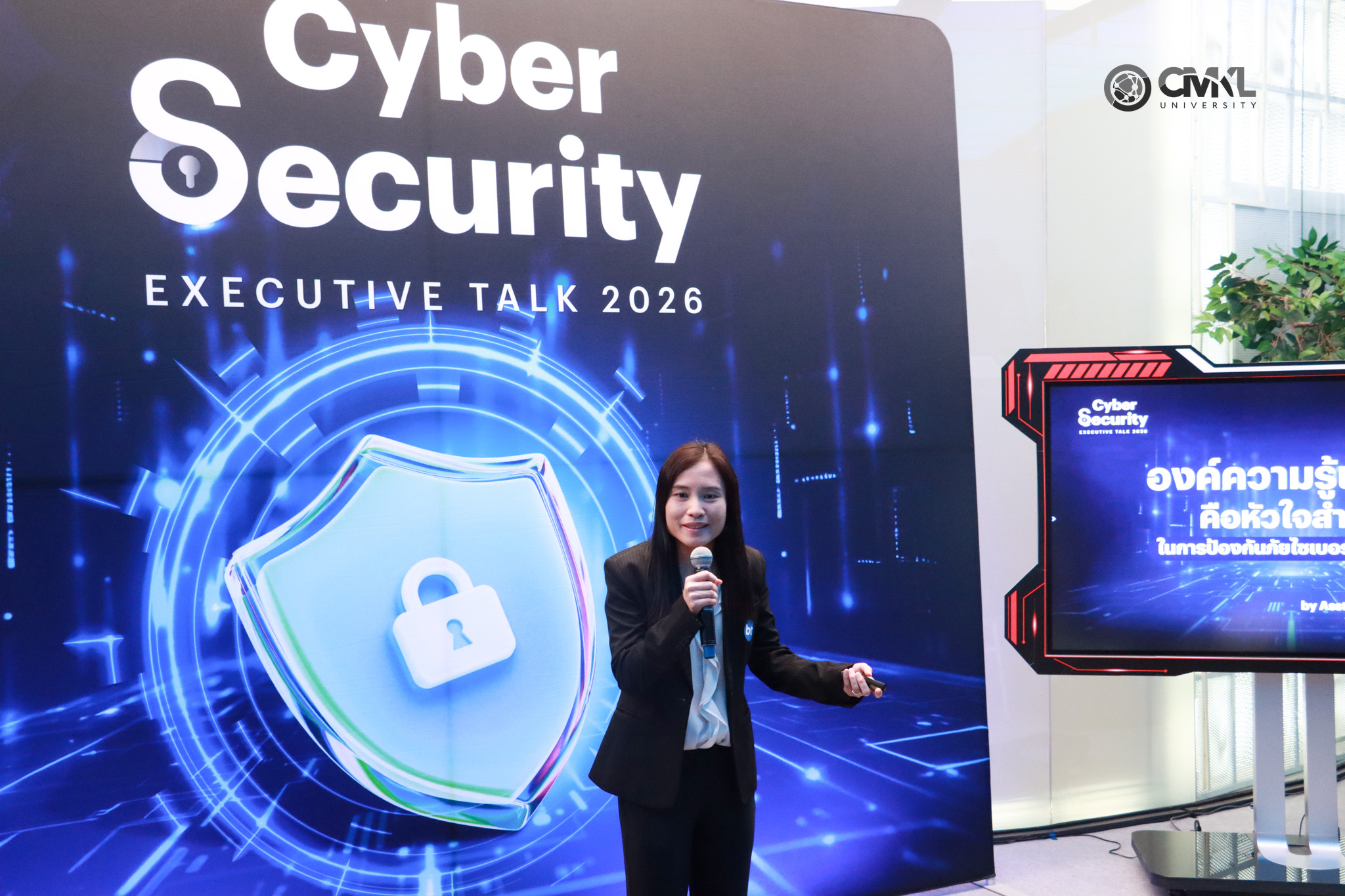
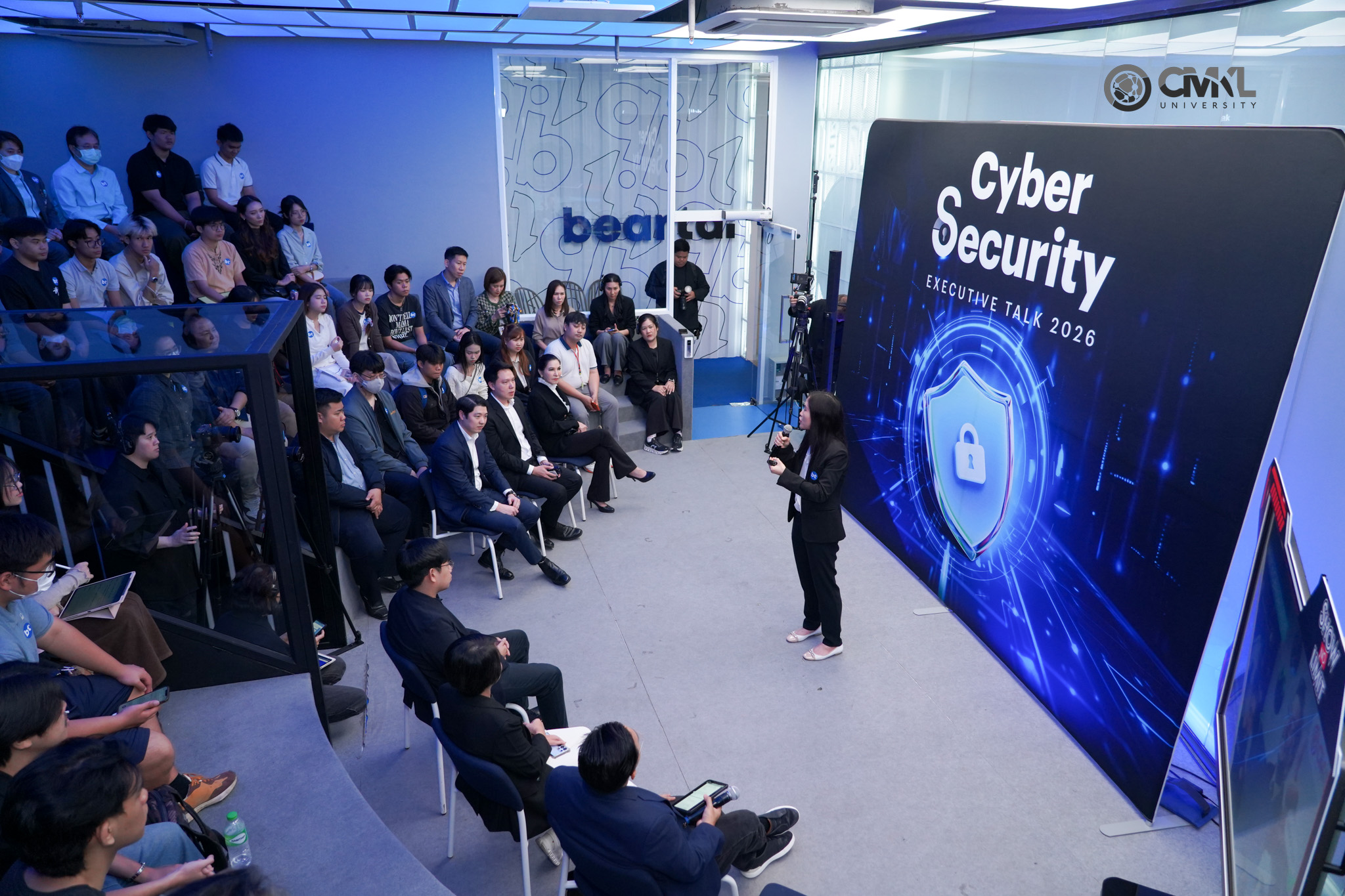
The Cyber Security Executive Talk 2026, organized through a strategic collaboration between Beartai, CMKL University, and CP AXTRA, emphasized that cybersecurity resilience depends not only on technology, but also on people, knowledge, and organizational readiness.
As cyber threats become increasingly difficult to detect, CMKL University joined Beartai and CP AXTRA for the Cyber Security Executive Talk 2026, a strategic forum focused on the growing challenge of “Invisible Threats” in today’s digital landscape.
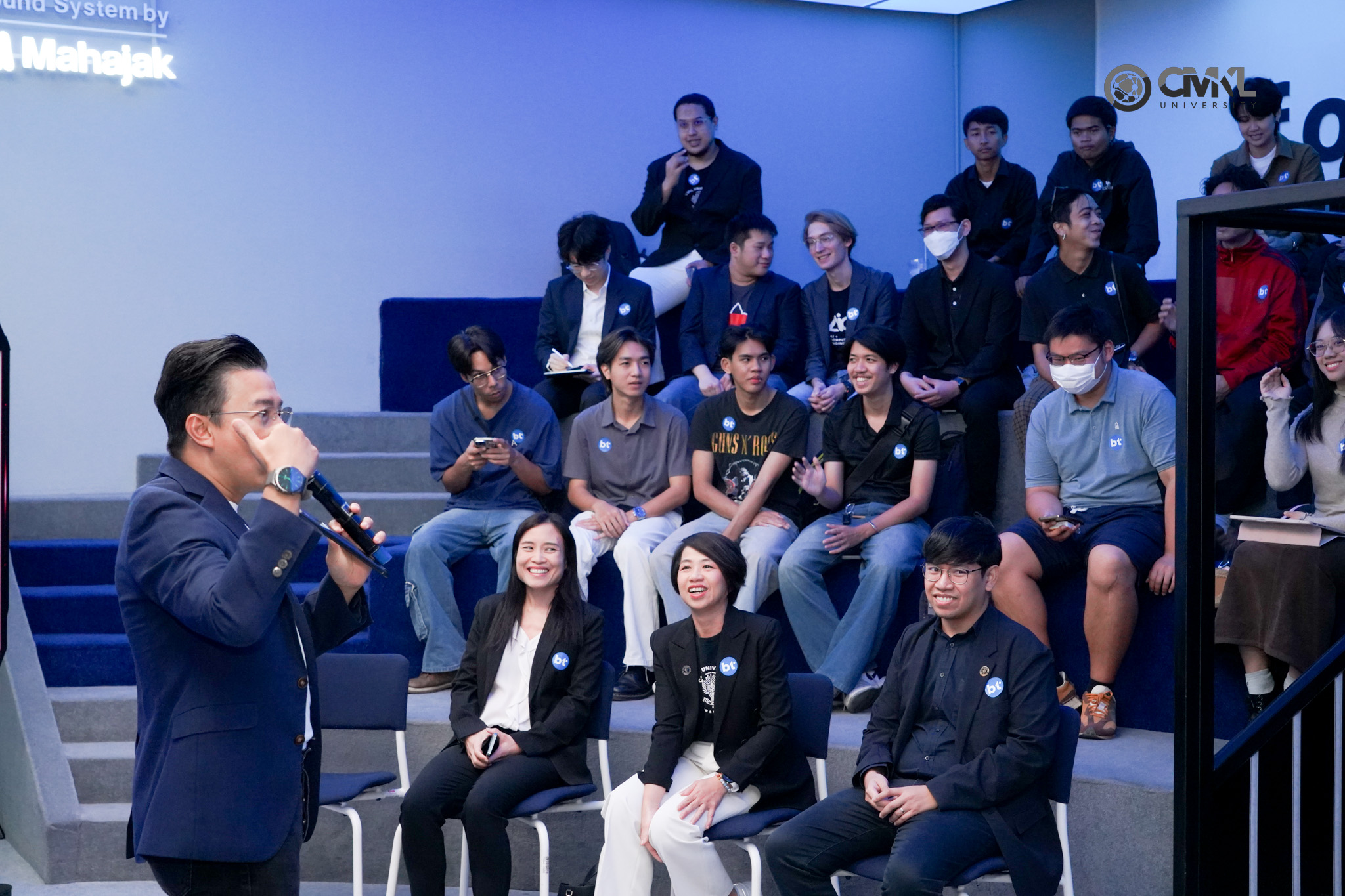
The event brought together leaders from media, academia, and industry to examine how organizations can strengthen cybersecurity resilience beyond technology investment. The central message was clear: sustainable cyber defense begins with people, knowledge, and preparedness.
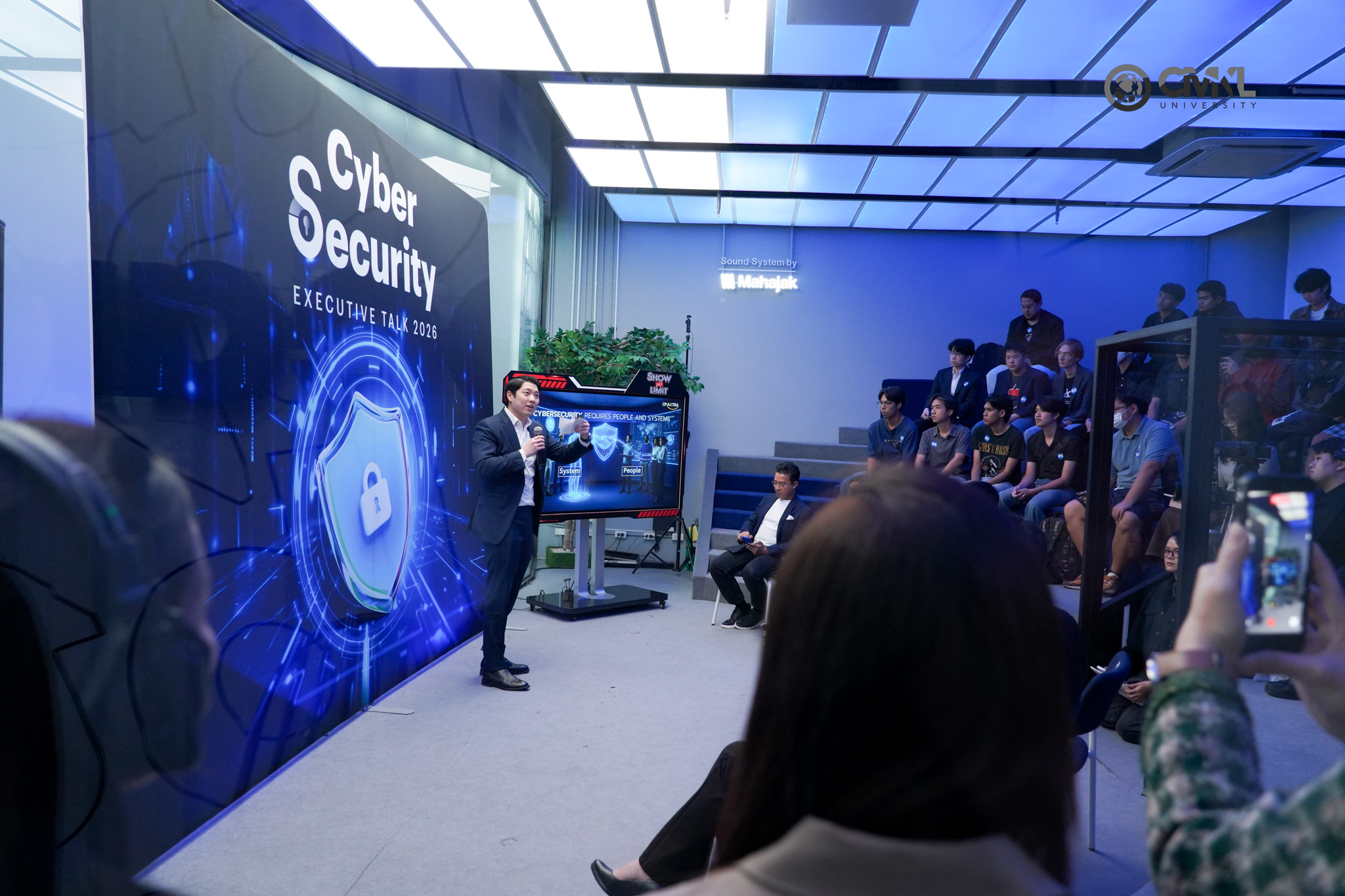
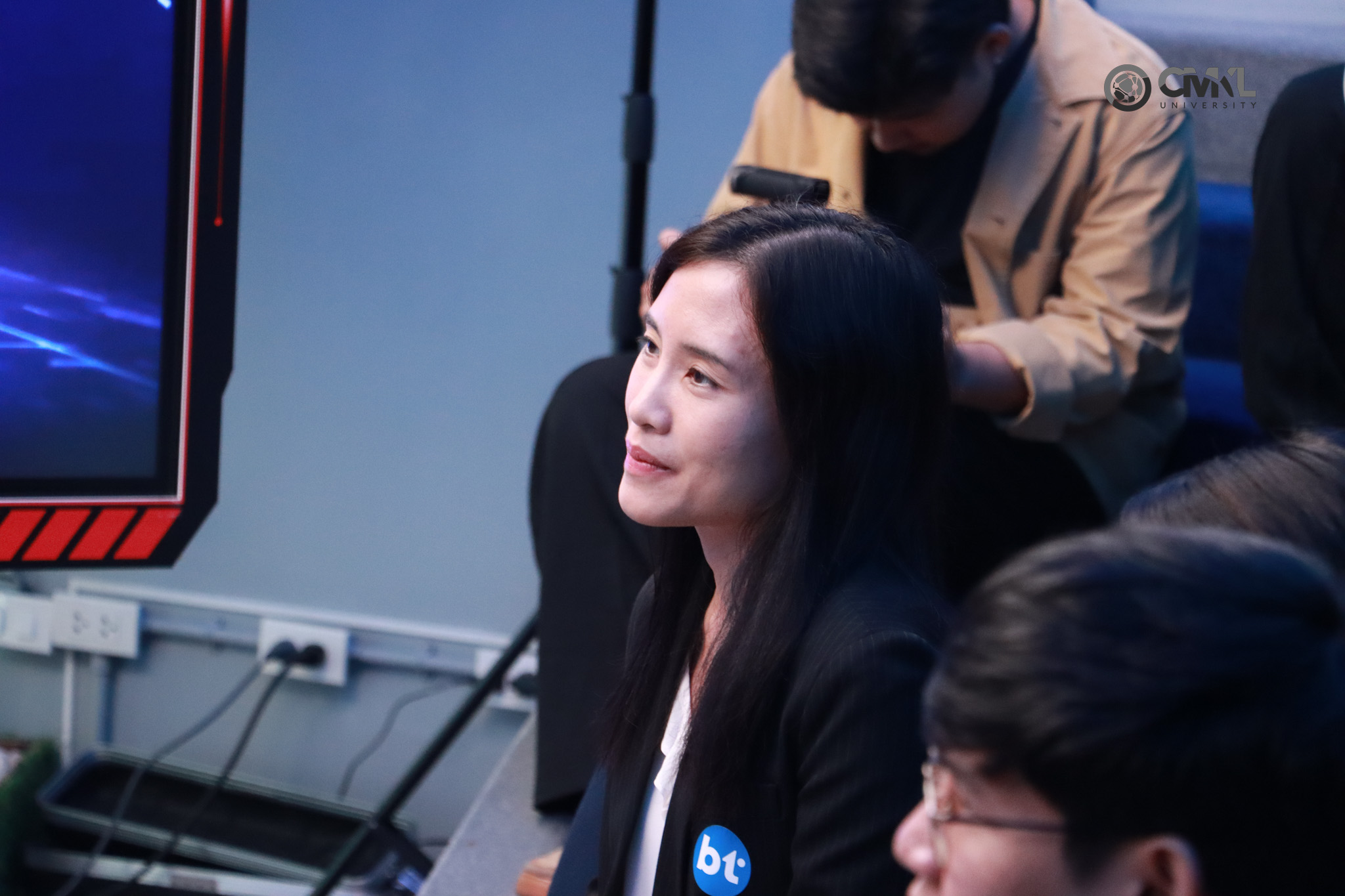
The keynote address was delivered by Asst. Prof. Dr. Orathai Sangpetch, Vice President of Research & Strategy at CMKL University, on the topic “Knowledge and People: The Strongest Defense Against Invisible Threats.” Her talk emphasized that while advanced tools and infrastructure remain essential, they are not sufficient on their own. Organizations must also invest in human capability development and effective knowledge management to recognize, respond to, and recover from cyber risks.
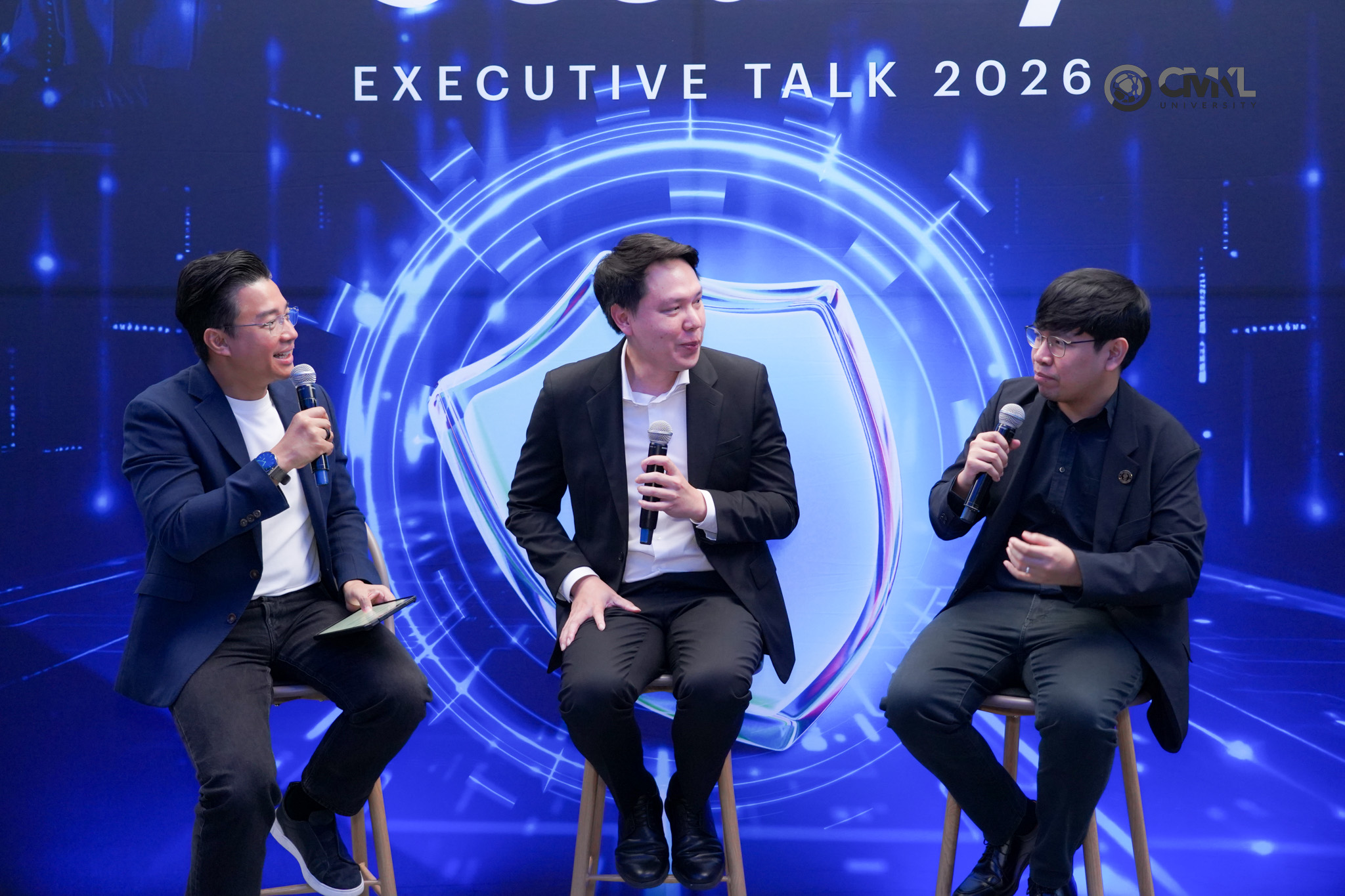
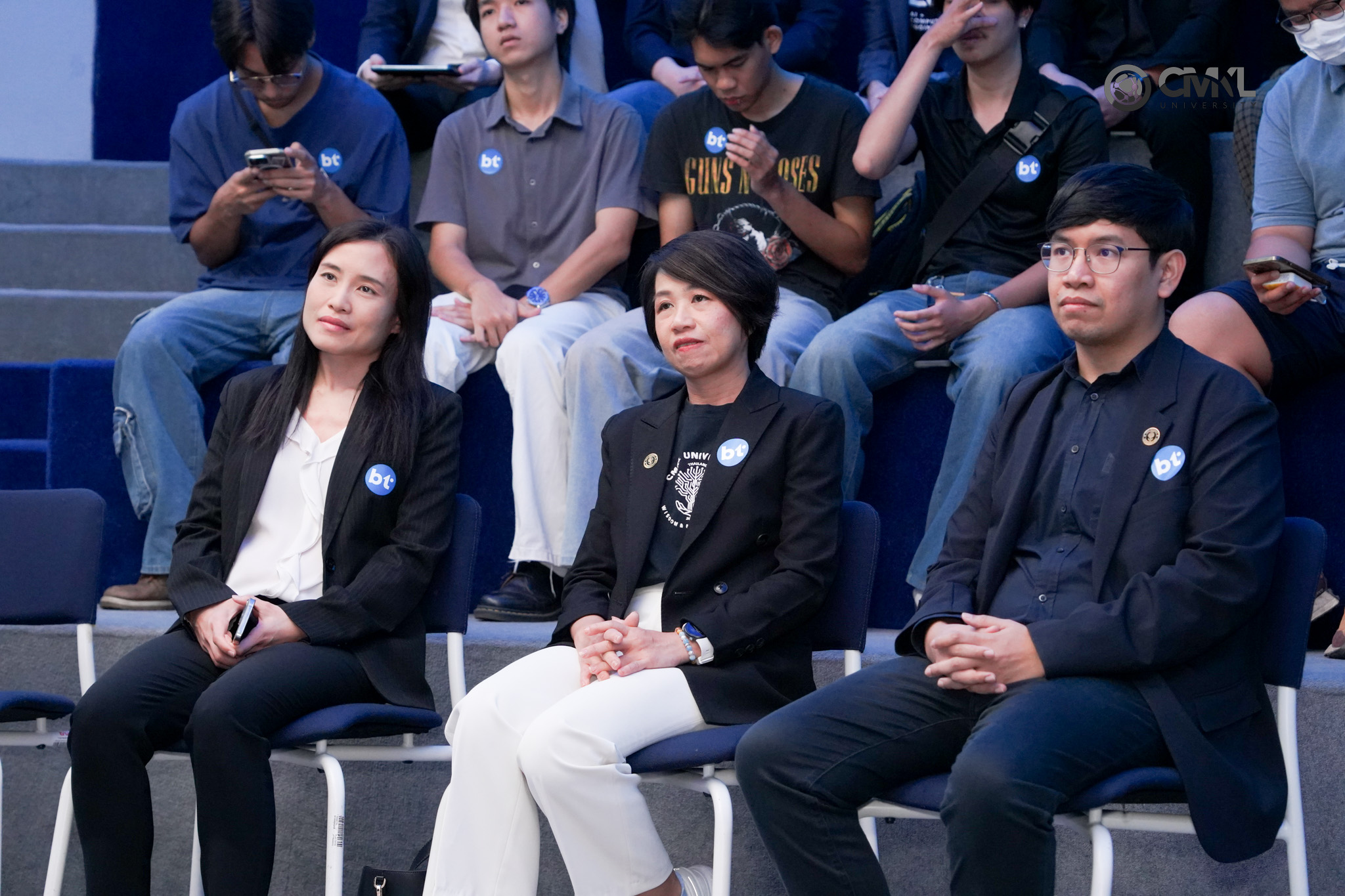
The program also featured a panel discussion with Pongsuk “Nui” Hiranprueck of Beartai, Tirayu Songvetkesem, Chief Digital Officer of CP AXTRA, and Dr. Charnon Pattiyanon, Assistant Director of IT and Instructor at CMKL University. The discussion addressed cybersecurity from both individual and enterprise perspectives, including everyday digital exposure, organizational IT infrastructure readiness, overlooked vulnerabilities, and practical strategies for strengthening defenses.
For CMKL, the discussion reflects the university’s commitment to advancing AI, cybersecurity, and practical engineering education in response to real-world challenges. As Thailand’s AI and innovation-focused university, CMKL works to prepare professionals who can understand complex technological systems, identify emerging risks, and apply responsible innovation in high-impact environments.
Together, the speakers underscored that cyber risks are no longer isolated technical issues. They affect business continuity, public trust, data governance, operational systems, and the people who use digital technologies every day.
The real question is no longer “Will cyber threats happen?” but “How prepared is your organization to respond?”
Through initiatives such as the Cyber Security Executive Talk 2026, CMKL continues to support Thailand’s digital ecosystem by strengthening cybersecurity knowledge, fostering industry collaboration, and preparing talent capable of addressing the challenges of an increasingly connected world.



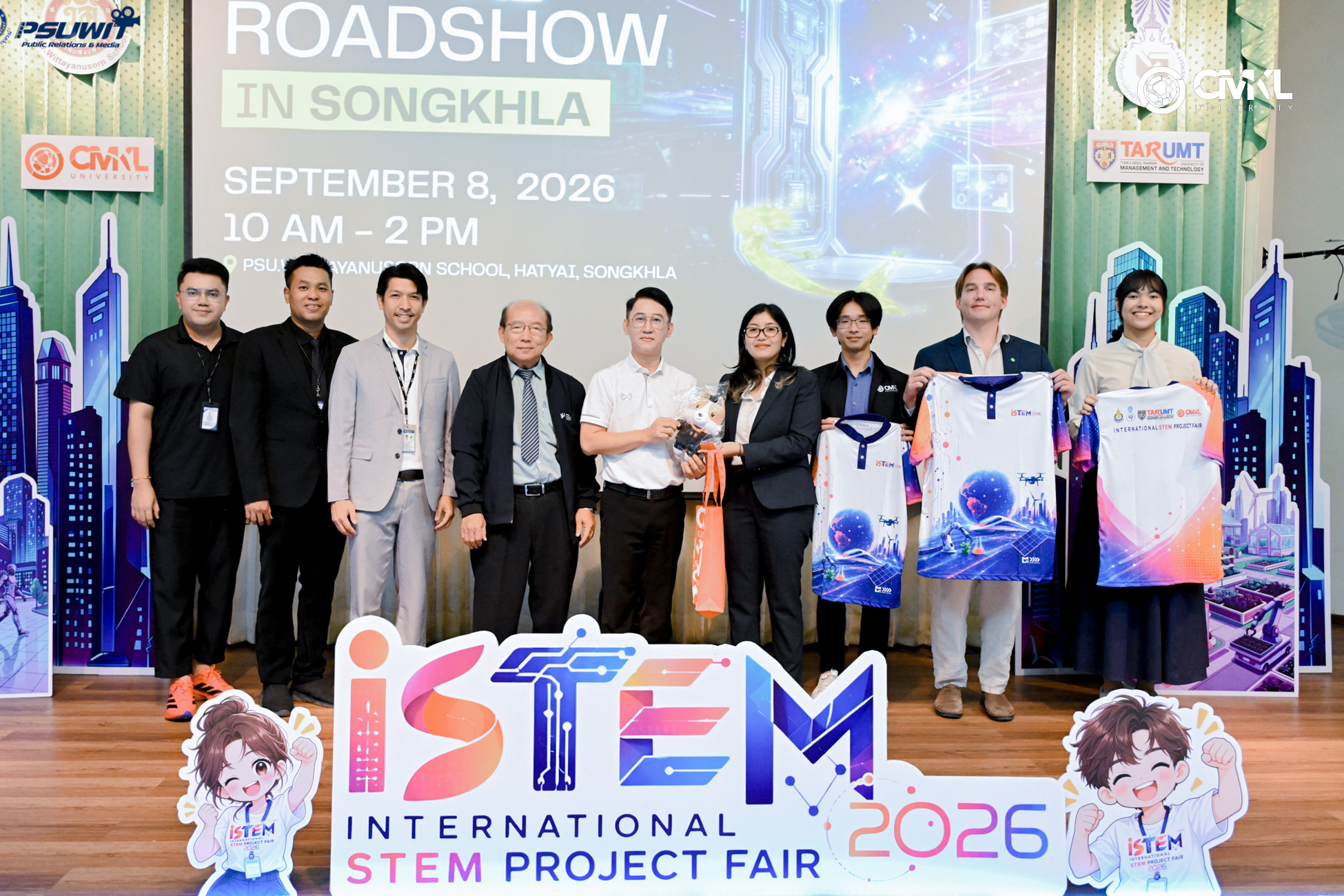
CMKL University recently brought its AI Roadshow to PSU Wittayanusorn School in Songkhla, offering high school students a day of immersive AI workshops led by world-class faculty and research team members. The event aimed to equip the next generation of tech leaders with practical skills and career insights.
Read more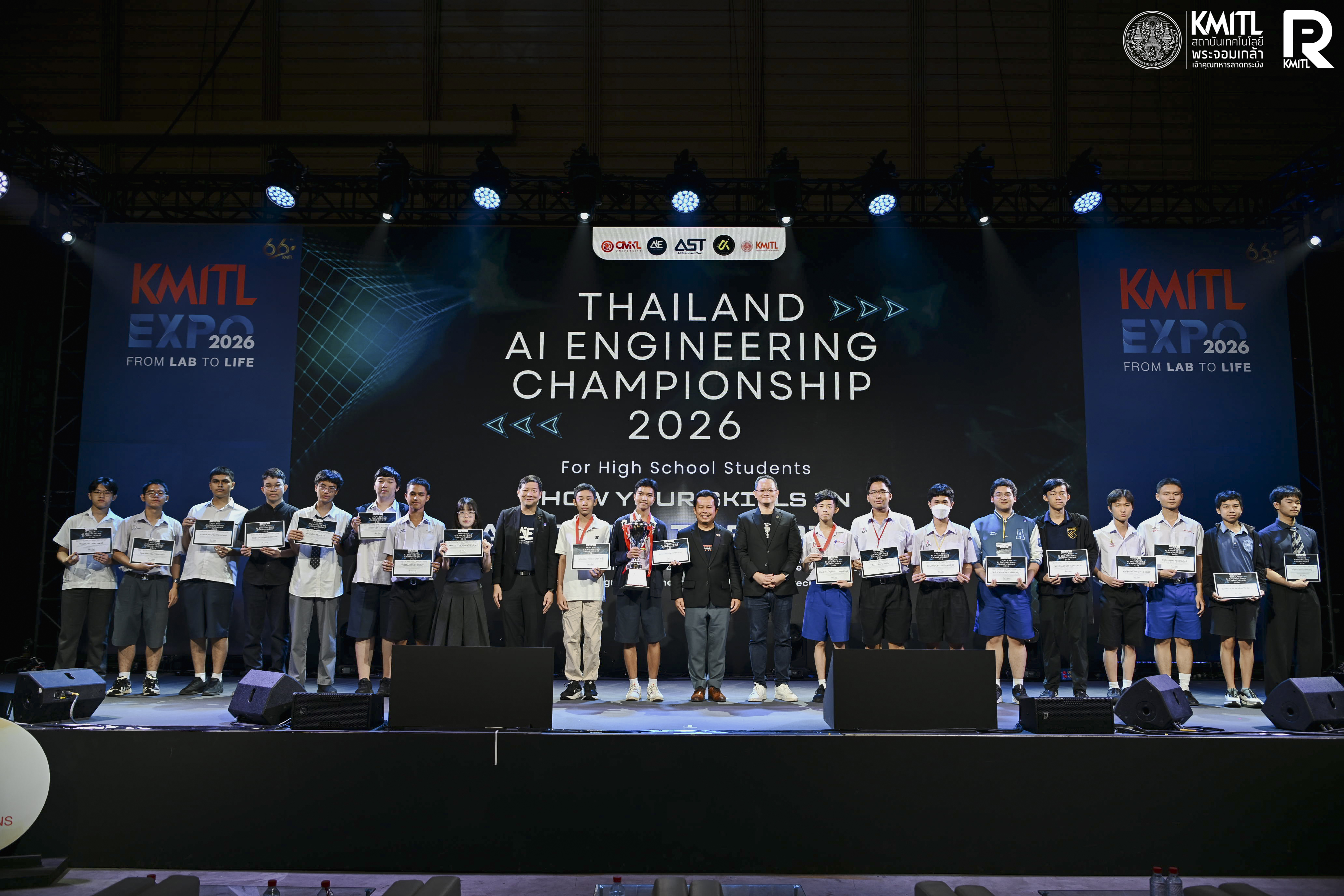
Thailand AI Engineering Championship (TAIEC) 2026, hosted by CMKL University and the AI Engineering Institute, brought together high school students from across Thailand to test their skills in AI, programming, problem-solving, and system design through a national-level competition.
Read more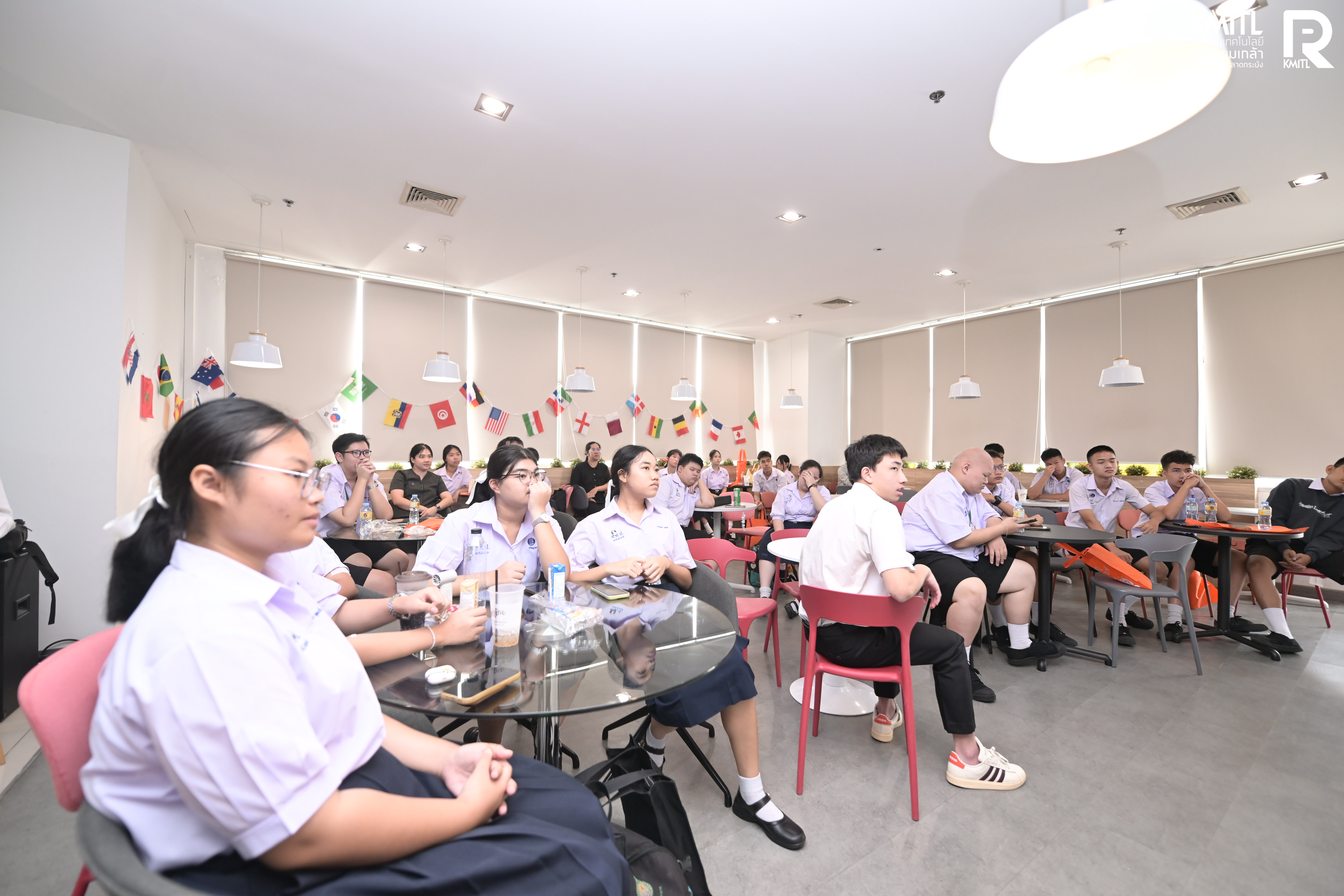
CMKL Open Days 2026 welcomed students, parents, and visitors to campus for a closer look at the university, its academic programs, student experience, and approach to AI education.
Read more