
Can Thailand Become an AI Hub Without Compromising Sustainability? CMKL University Explores the Challenge at SX2026
CMKL News | November 9, 2026
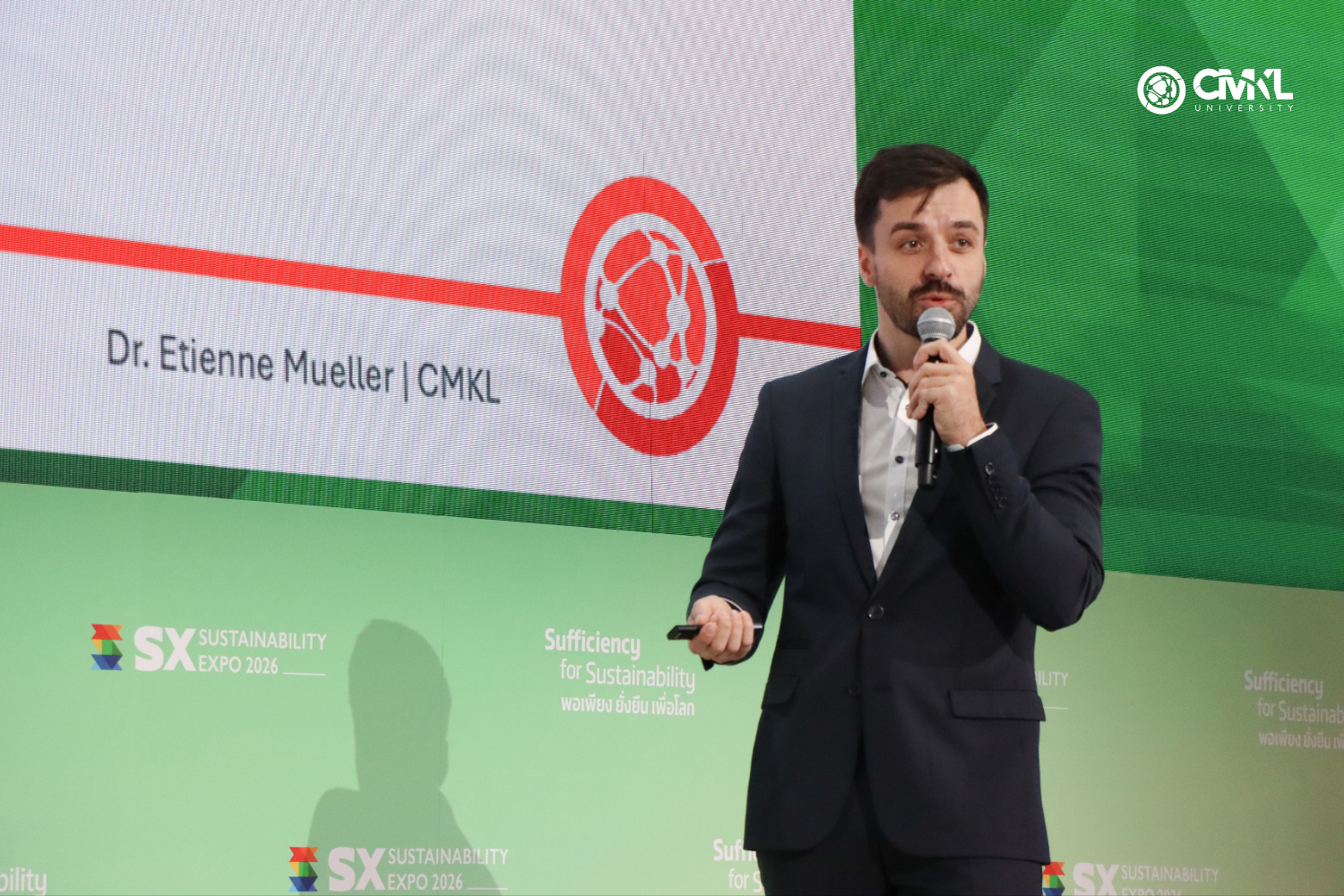
Dr. Etienne Mueller highlights the growing energy demands of artificial intelligence and the importance of sustainable data centre development
as Thailand accelerates its ambition to become a regional AI hub.
Bangkok, Thailand, 9 November 2026 – As Thailand moves toward becoming a regional hub for artificial intelligence (AI),
the rapid expansion of digital infrastructure is raising important questions about energy consumption, environmental impact, and long-term sustainability.
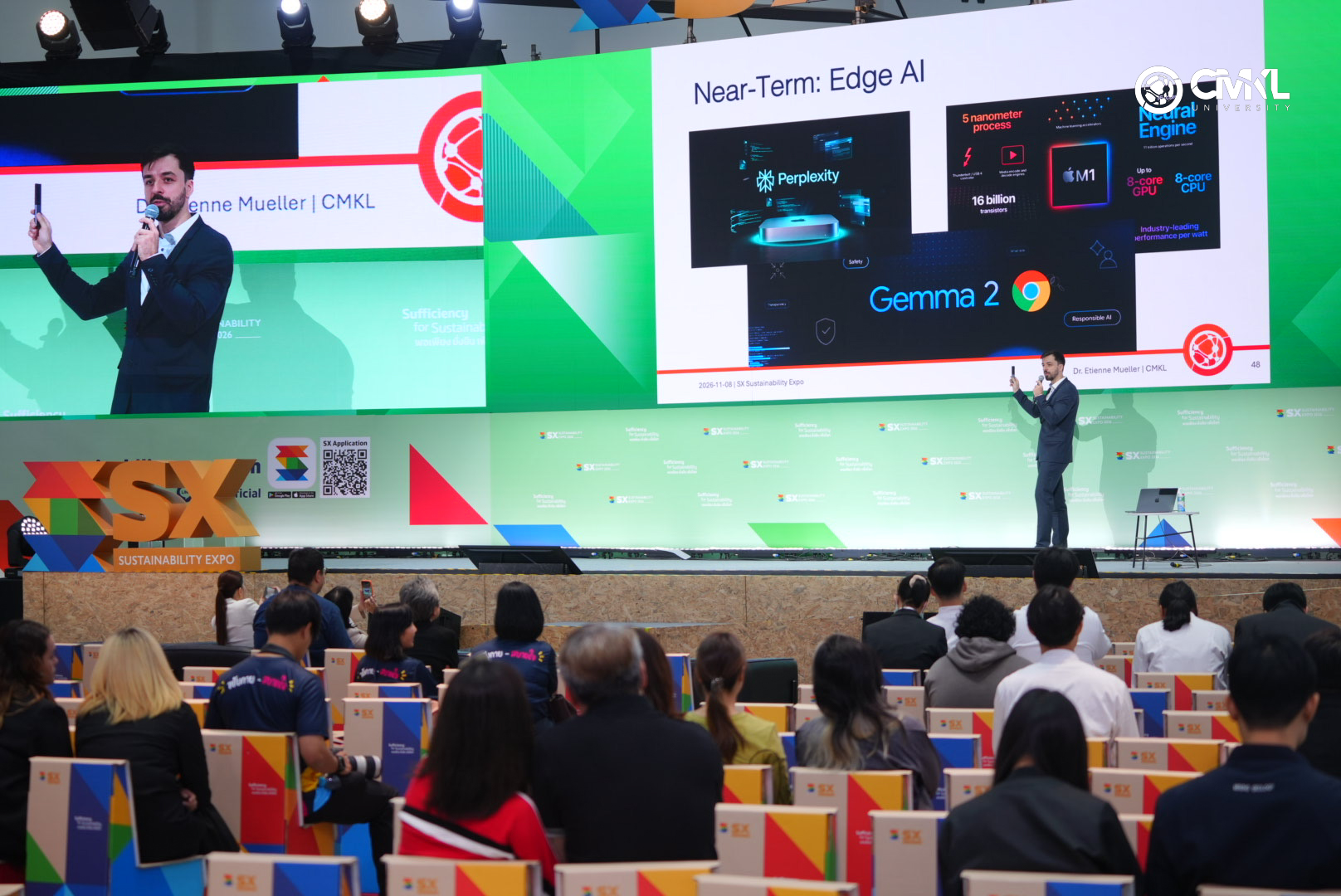
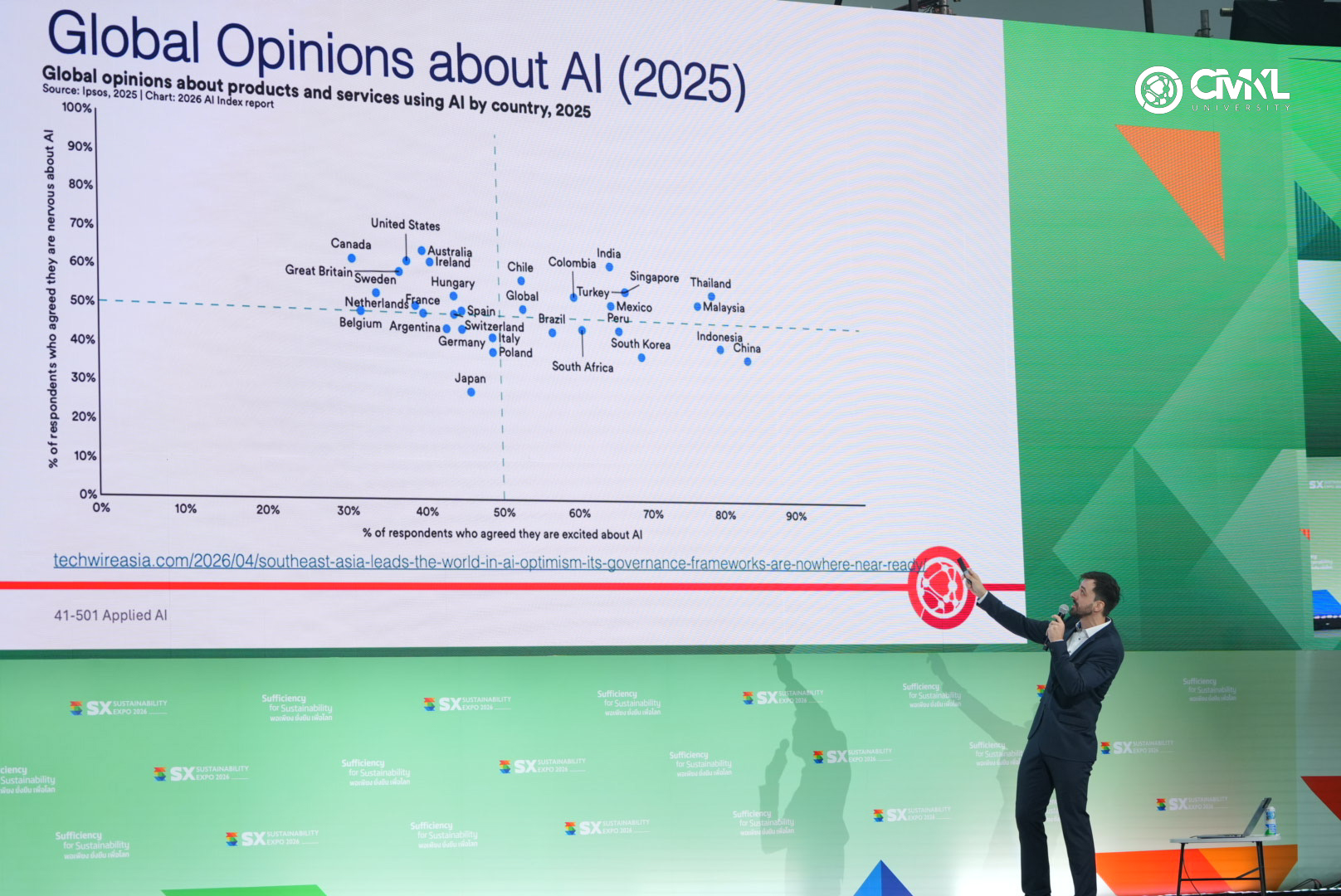
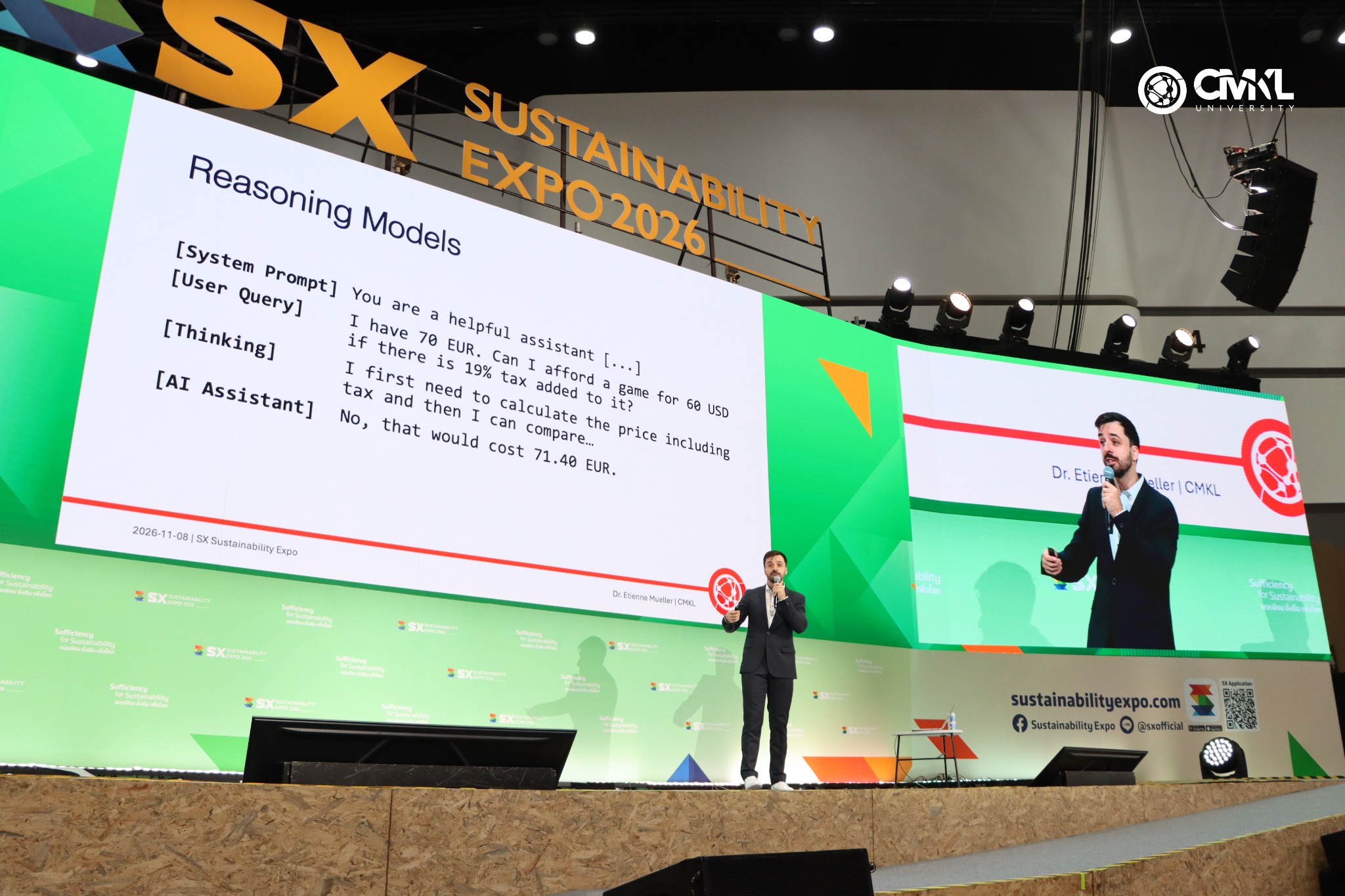
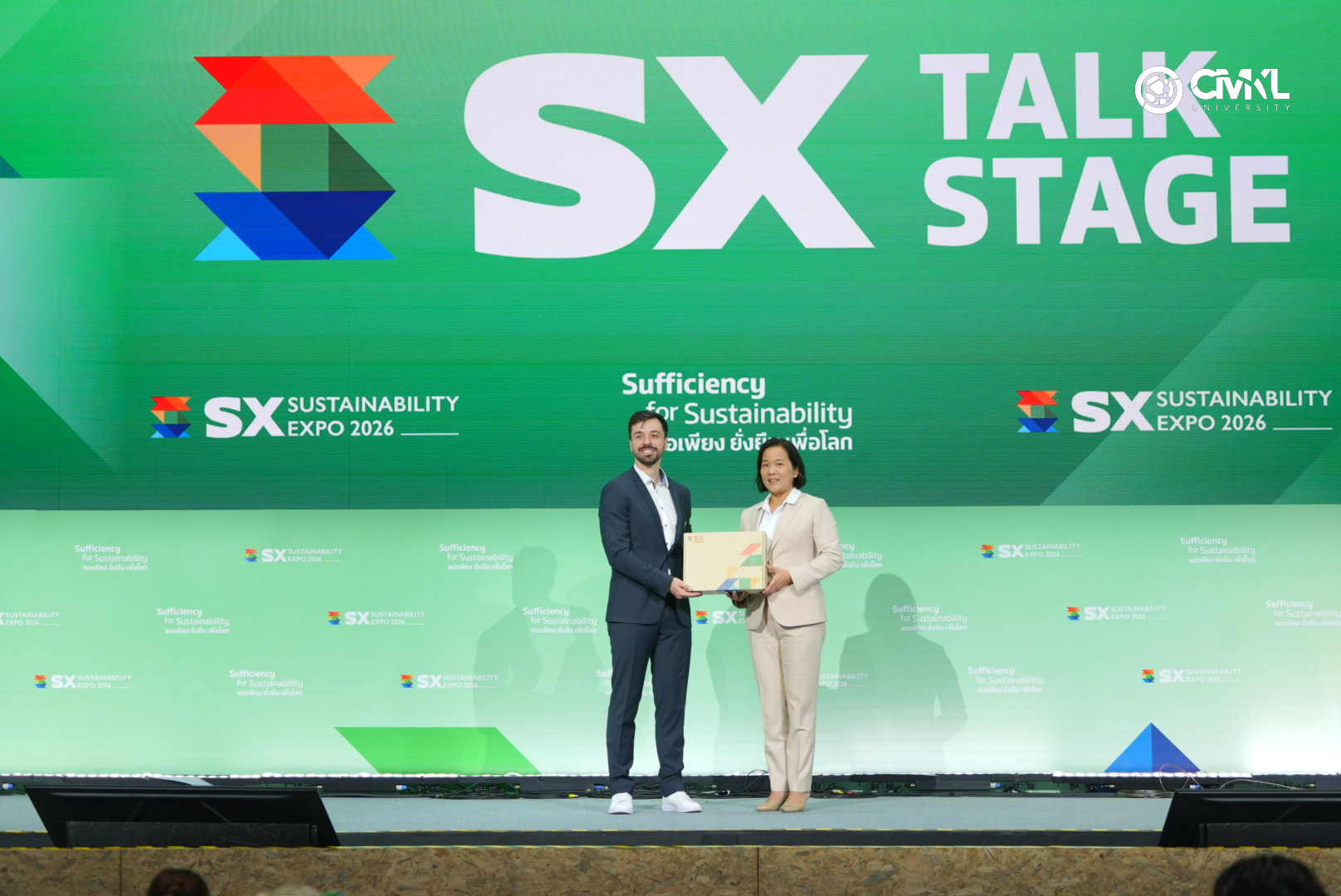
At Sustainability Expo 2026 (SX2026), held at the Queen Sirikit National Convention Center on 8 November 2026,
Dr. Etienne Mueller of CMKL University addressed these challenges during his keynote session, “AI for Sustainability & Green Data Center.”
The session explored how the growing demand for AI computing power is reshaping energy requirements
and why technological progress must be accompanied by more sustainable approaches to infrastructure development.
The Environmental Cost of AI Expansion
Artificial intelligence is transforming industries, accelerating research, and creating new economic opportunities.
Yet behind these capabilities lies an increasingly complex network of data centres, computing systems, and energy infrastructure.
As AI applications become more sophisticated and widely adopted, the computational resources required to train
and operate AI models continue to grow. This raises concerns about electricity demand, carbon emissions,
and the environmental consequences of expanding data centre infrastructure.
For Thailand, which aims to strengthen its position as a regional AI and digital technology hub,
balancing economic competitiveness with environmental responsibility is becoming an increasingly important priority.
The discussion at SX2026 emphasized that developing AI infrastructure should go beyond increasing computing capacity.
Greater attention must also be given to clean energy, efficient computing technologies, and the sustainable operation of data centres.
Building Smarter, More Energy-Efficient AI
Alongside sustainable infrastructure, improving the efficiency of AI itself offers another important pathway toward reducing its environmental footprint.
Dr. Mueller's research at CMKL University focuses on brain-inspired and energy-efficient artificial intelligence,
exploring approaches that can improve computational efficiency while reducing energy requirements.
These research directions are particularly relevant as the AI industry seeks to develop systems capable of delivering
increasingly sophisticated capabilities without a proportional increase in resource consumption.
Developing more efficient AI models, computing architectures, and supporting infrastructure can help address the tension
between the growing demand for intelligent technologies and the need to reduce their environmental impact.
The broader challenge is not simply to build more powerful AI systems, but to rethink how they are designed, developed, and deployed.
Connecting Thailand's AI Ambitions with Sustainability Goals
Thailand's ambition to become an AI hub presents significant opportunities for innovation, investment, and economic development.
However, long-term success will also depend on the country's ability to support technological growth with sustainable energy and infrastructure strategies.
As highlighted in Bangkok Post's coverage of the SX2026 discussion, expanding data centre capacity without corresponding improvements
in clean energy availability and technological efficiency could place additional pressure on Thailand's environmental goals.
Addressing these challenges requires collaboration among researchers, technology companies, energy providers, policymakers, and educational institutions.
Universities have an important role to play in this transition by advancing research, developing technical expertise,
and supporting solutions that connect AI innovation with real-world sustainability needs.
CMKL University's Commitment to Responsible AI Innovation
At CMKL University, advancing artificial intelligence goes hand in hand with examining how technology can create meaningful and sustainable impact.
Through research in energy-efficient computing and brain-inspired AI, CMKL contributes to the development of technologies
that aim to reduce resource requirements while maintaining the capabilities needed for future applications.
CMKL also contributed educational content to the Green Data Center exhibition at SX2026, located in the Better Living: Resource Security Zone.
The exhibition introduces visitors to the importance of green data centres, their potential benefits,
and their relevance to Thailand's evolving digital infrastructure.
By bringing research insights into public discussions such as SX2026, the university aims to strengthen awareness
of the environmental considerations shaping the next generation of AI development.
The future of AI should not be measured by computing power alone, but by how responsibly and sustainably that power is developed and used.
As Thailand continues its journey toward becoming a regional AI hub, CMKL University remains committed to advancing research,
education, and innovation that support both technological progress and a more sustainable future.
Watch the keynote session: AI for Sustainability & Green Data Center – Dr. Etienne Mueller : https://www.youtube.com/watch?v=r2I9zyTFucM
In the news:
https://www.bangkokpost.com/sustainability/3351170/ai-hub-push-risks-hurting-green-goals
https://www.facebook.com/share/p/18cfvqeiy6/
https://www.amarintv.com/spotlight/sustainability/562344
https://www.facebook.com/share/p/18j9wMeu4T/
More CMKL Activities at Sustainability Expo 2026
CMKL University's involvement in SX2026 continues with a series of talks, interactive workshops,
and innovation activities exploring how technology and artificial intelligence can contribute to a more sustainable future.
Discover more CMKL activities at SX2026: https://cmkl.ac.th/news-and-events/all-events





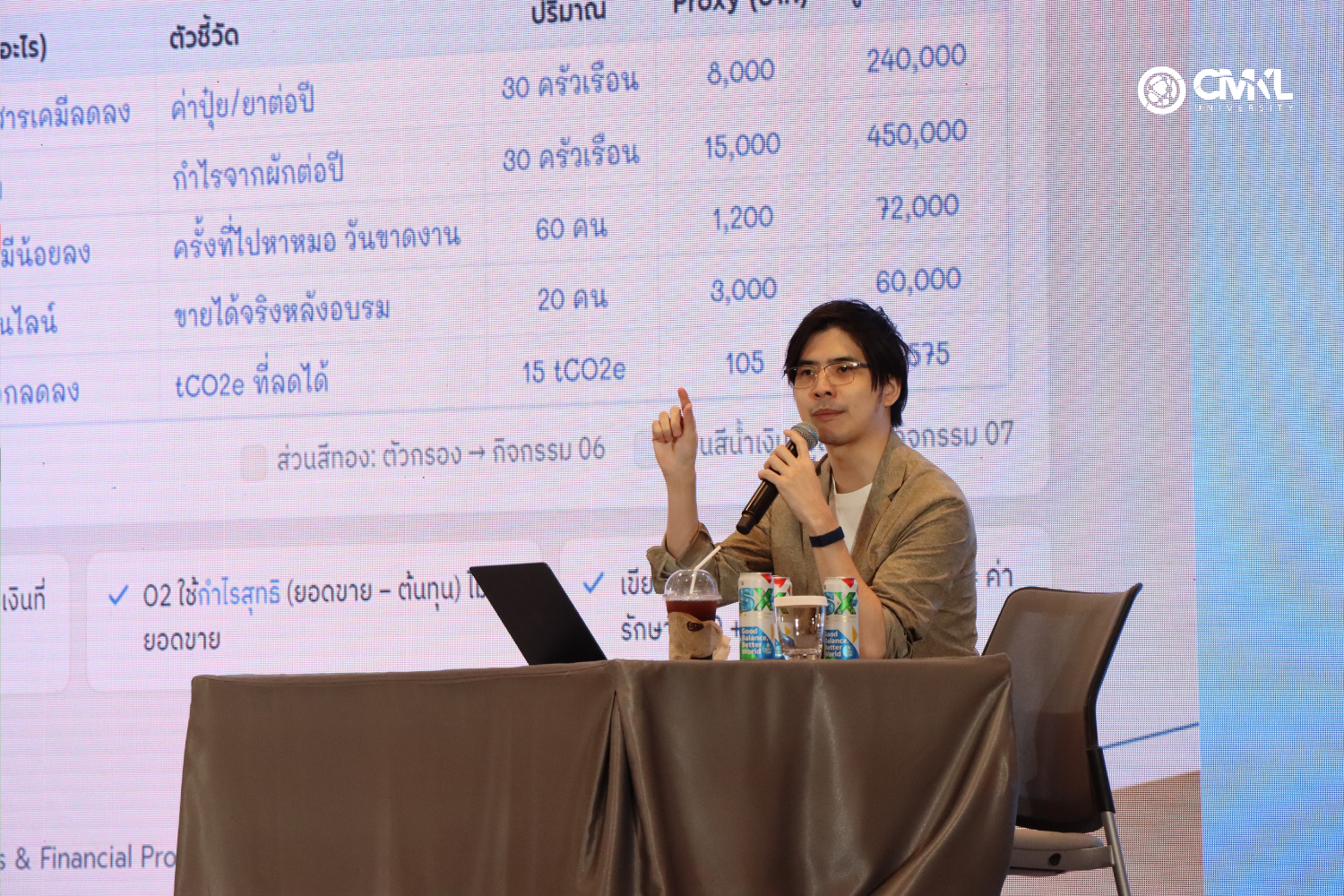
Held at the Queen Sirikit National Convention Center (QSNCC), the three-hour session introduced participants to Social Return on Investment (SROI), a framework used to assess and communicate the social, economic, and environmental value generated by projects and initiatives.
Read more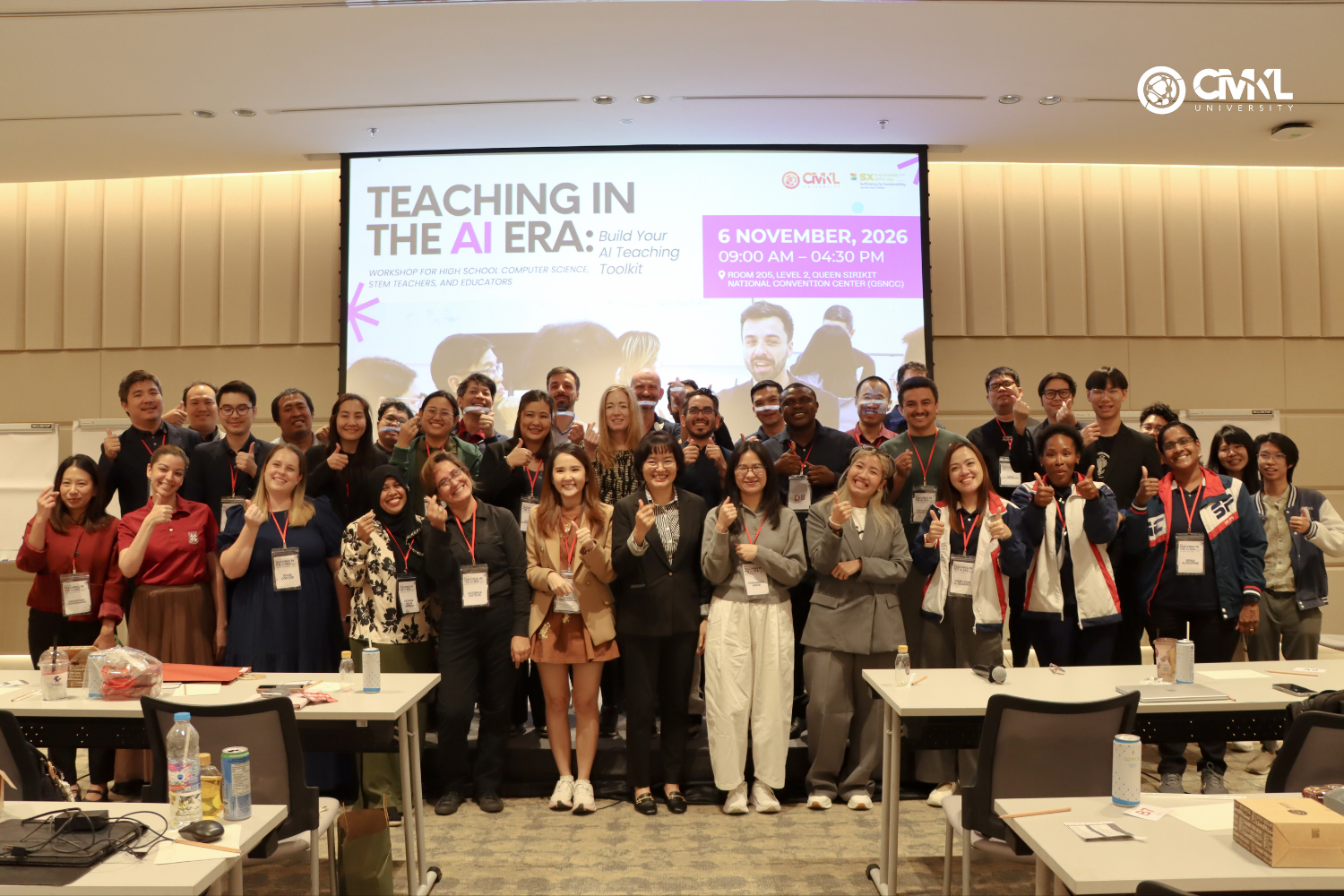
Held on 6 November 2026 at Queen Sirikit National Convention Center in Bangkok, the workshop brought together educators from across Thailand to explore how AI could support lesson planning, classroom activities, assessment, and feedback.
Read more
A delegation from CMKL University visited SICPA and the unlimitrust campus in Lausanne, Switzerland, to discuss potential collaboration in artificial intelligence, digital infrastructure, cybersecurity, and support for Thai startups.
Read more